Overview
Kalwa, Mumbra, Diva, and Airoli represent Thane East's most underserved communities for specialist urological care.Read moreShow less
Urinary tract infections in these communities are often managed at primary care level alone — with repeated antibiotic prescriptions, no urine cultures, and no investigation of why infections recur. The consequences include antibiotic resistance, missed diagnoses (including kidney stones and bladder abnormalities causing the recurrence), and in some cases kidney damage from inadequately managed upper tract infections. HRG Urology at Rajiv Gandhi Medical College brings proper specialist UTI investigation to Kalwa — accessible by local train from Mumbra and Diva, with the institutional diagnostic infrastructure of the medical college campus supporting same-visit investigations.
What to know
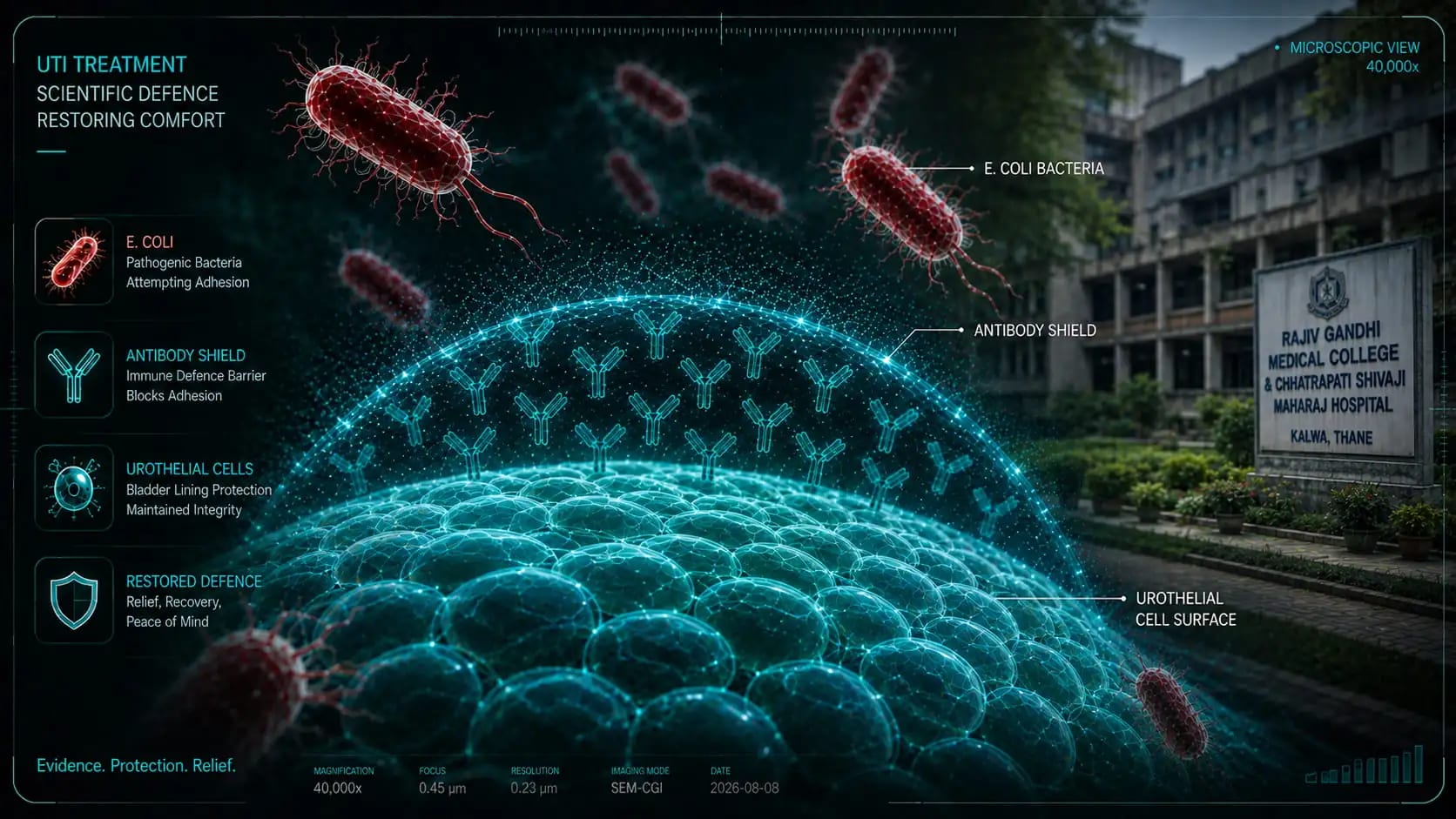
UTI Treatment at Rajiv Gandhi Medical College, Kalwa
Urinary tract infections (UTIs) are caused most commonly by E.Read moreShow less
coli entering the urethra. Recurrent UTIs — three or more per year — require urine culture and sensitivity testing, ultrasound, and cystoscopy to identify structural causes. Culture-guided antibiotics prevent resistance. UTIs in men always require urological investigation. Complicated UTIs involving kidneys present with fever, flank pain, and require prompt specialist management.
Pyelonephritis Risk in the Kalwa and Mumbra Population
Upper tract UTI — pyelonephritis — is more prevalent in communities where primary care access is limited and lower UTI is undertreated.Read moreShow less
In Kalwa, Mumbra, and Diva, patients with UTI symptoms sometimes delay seeking medical attention until fever and flank pain develop — indicating that the infection has already ascended to the kidney. At Rajiv Gandhi Medical College, the institutional emergency infrastructure supports management of pyelonephritis requiring inpatient treatment, while the HRG Urology outpatient team manages the post-acute investigation to prevent recurrence.
The Institutional Advantage for UTI Investigation at Kalwa
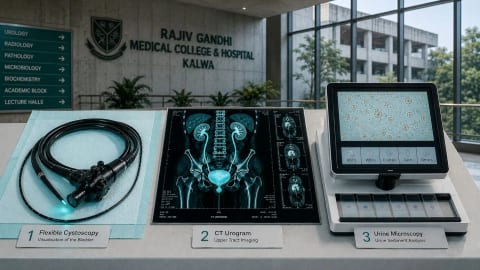
The medical college campus provides a diagnostic environment not available at standalone clinics: on-site laboratory for urine microscopy and culture, ultrasound and CT KUB imaging, and flexible cystoscopy equipment — all within a single campus.Read moreShow less
For patients from Mumbra and Diva who travel specifically to Kalwa for this appointment, this means all necessary investigations can often be arranged within a single visit, reducing the number of trips required.
Travel and Parking Guide – Rajiv Gandhi Medical College, Kalwa
Rajiv Gandhi Medical College, Kalwa, Thane 400605.Read moreShow less
Local train: Kalwa station (central line), 5 minutes by auto from campus gate. From Mumbra: 5–7 minutes by train. From Diva: 5 minutes by train. By road from Airoli: 20 minutes via Airoli bridge. Campus parking available for private vehicle patients.
Why RGMC Kalwa
Mumbra, Diva, and Airoli patients choose Rajiv Gandhi Medical College because Kalwa station is 5–7 minutes by local train from all three areas.Read moreShow less
Making specialist UTI investigation accessible without road travel or private transport.
For patients who have developed pyelonephritis.Read moreShow less
Kidney infection — the Rajiv Gandhi Medical College campus provides access to inpatient management if required, with the HRG Urology outpatient team managing the follow-up investigation and recurrence prevention.
Nearby areas
KalwaMumbraDivaAiroliThane East
Rajiv Gandhi Medical College serves UTI patients from Kalwa, Mumbra, Diva, Airoli, Thane East, Vitawa, Kopri, and via the railway, patients from Vashi and Ghansoli in Navi Mumbai.Read moreShow less
The campus is a recognised Kalwa landmark accessible from all of these areas within 15–20 minutes.
Questions
Can patients from Diva and Mumbra reach Rajiv Gandhi Medical College by train for UTI specialist care?
Yes. Kalwa station is 5–7 minutes from Diva station and approximately 10 minutes from Mumbra station on the central line. From Kalwa station, the medical college campus is 5 minutes by auto-rickshaw. This makes HRG Urology at Rajiv Gandhi Medical College one of a convenient specialist UTI options for patients from Thane East without requiring private transport.
What is the risk if a UTI reaches the kidneys and how urgent is it to treat?
Pyelonephritis — kidney infection — is a serious condition requiring prompt antibiotic treatment, often administered intravenously in hospital. Left untreated, severe pyelonephritis can cause sepsis, renal abscess, and permanent kidney scarring. If you develop fever above 38.5°C, rigors (shaking chills), and severe back or flank pain alongside UTI symptoms, seek emergency care immediately rather than waiting for a clinic appointment. The Rajiv Gandhi Medical College emergency department can manage acute pyelonephritis, and HRG Urology coordinates the follow-up investigation.
Is cystoscopy painful and is it available at Rajiv Gandhi Medical College?
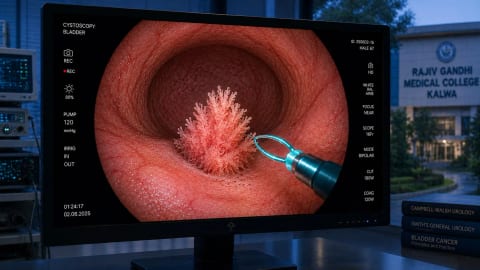
Flexible cystoscopy — the type most commonly used for UTI investigation — is performed using a thin, flexible camera passed through the urethra under local anaesthetic gel. The procedure takes 5–10 minutes and causes mild discomfort rather than pain. Most patients describe it as uncomfortable but not distressing. It provides direct visualisation of the bladder lining and can detect bladder tumours, stones, diverticula, and other abnormalities that cause recurrent UTI. Cystoscopy equipment is available at Rajiv Gandhi Medical College.
How does HRG Urology at Rajiv Gandhi MC manage UTI differently from a general practitioner?
The key differences are: urine culture with sensitivity testing before prescribing (GP often prescribes empirically); investigation for structural causes of recurrence (GP rarely arranges imaging for UTI); cystoscopy where indicated (not available at GP level); and managed prophylaxis programmes with structured monitoring. The specialist approach treats the condition rather than the episode — the aim is to end the recurrence cycle, not just to clear the current infection.
What should I bring to my first UTI consultation at Rajiv Gandhi Medical College?
Bring a midstream urine sample collected that morning in a clean container — this allows immediate dipstick testing and can be sent for culture without requiring a repeat collection. Also bring a list of all antibiotics you have taken for UTI in the past year, including dates and duration of each course. Any previous urine culture reports are valuable if you have them. This information allows the HRG Urology team to understand your antibiotic history and resistance pattern immediately.